What Raw Materials Are Used to Make Cow Dung Paint?
The raw materials for cow dung paint manufacturing are a small group of natural, mineral and chemical inputs. The core one is processed cow dung powder. Around it sit fillers, binders, pigments, thickeners and preservatives, and clean water. Cow dung paint ingredients are chosen for the product: distemper, emulsion, primer or clay finish.
These cow dung paint raw materials answer the common question of what raw materials are needed to manufacture cow dung paint. Gobar paint raw materials and natural paint raw materials follow the same logic. The cow dung based paint ingredients list below shows each group and its function in the paint.
| Raw material | Function | Notes |
|---|---|---|
| Processed cow dung powder | Main natural ingredient | Dried, ground, sieved; paint grade cow dung powder |
| Calcium carbonate | Filler, adds cover and smoothness | Fine grade; check whiteness and fineness |
| Hydrated lime | Alkaline filler used in some natural formulas | Handle with gloves; keep dry |
| Binder | Film formation and adhesion | Water based binders; dry binder for distemper |
| Mineral pigments | Colour | Check shade and strength by lot |
| Thickeners | Viscosity and settling control | Dose carefully |
| Preservatives | Protect from spoilage in wet paint | Choose suitable for water based paint |
| Water | Carrier and viscosity | Clean process water |
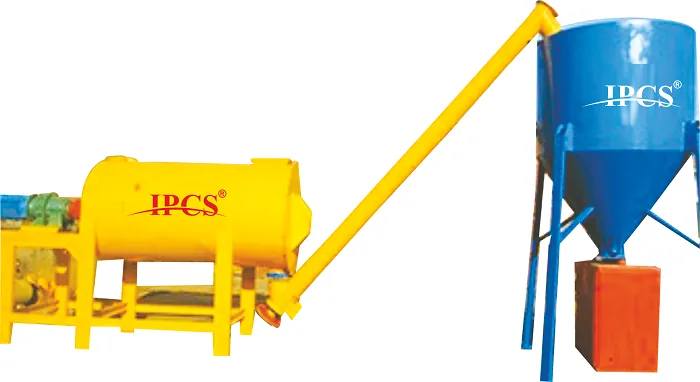
Dry powder lines and conveying
Fillers and dry binders are bulk powders. A dry mixer and conveyor line keeps handling clean, reduces loss and keeps the batch accurate when volume grows.
Small units can start with manual charging and add a conveyor later.
Cow Dung Paint Ingredients and Their Function
Cow dung powder for paint manufacturing
Cow dung powder for paint manufacturing must be dry, fine and free of fibre and grit. Paint grade cow dung powder is made by a fixed method so that each lot behaves the same in the mixer. Variation in moisture or fineness is the main reason batches differ.
How to prepare cow dung powder for paint production
Cow dung should be processed before paint manufacturing in a set sequence: collect from a clean source, dry thoroughly, grind, sieve and store in sealed bags. Check moisture and fineness on every lot. See Manufacturing Process for how the powder enters the batch.
Binders used in cow dung paint
Water based binders are used in natural cow dung paint, because they suit emulsion and primer, while dry binders suit distemper. Which binders and fillers are used in cow dung paint depends on the finish, washability and price band you want.
Fillers, pigments and additives
Fillers for natural paint manufacturing give body and cover. Pigments for cow dung paint are mostly mineral or natural, and shade can vary with the lot. A cow dung paint pigment and additive selection guide helps you fix suppliers and doses. Preservatives for cow dung paint prevent spoilage in wet paint and must be chosen with the binder.
Raw Material Sourcing for a Cow Dung Paint Plant
Raw material sourcing for a cow dung paint plant starts with a list of what you need each month, by quantity and grade. A raw material sourcing plan for a cow dung paint factory names two sources for each key material where possible, so that a delay at one supplier does not stop the plant.
Raw material sourcing for cow dung paint plant work is not only buying; cow dung paint raw material suppliers should be qualified before you buy in volume. Supplier qualification means testing a sample, checking consistency over a few lots and keeping a record. We help you build the approved supplier list; see Consultancy.
- 1
List monthly needs
By material, grade and quantity.
- 2
Shortlist suppliers
Local first for cow dung and bulk fillers.
- 3
Test samples
Run them in laboratory trials.
- 4
Approve and record
Keep an approved supplier list.
- 5
Review regularly
Re-test when a supplier changes grade or source.
Raw Material Storage and Quality Checks
Raw material storage protects quality before the material is used. Store powders off the floor, dry and sealed; keep liquids closed and labelled; keep pigments and chemicals apart; and use stock in the order received. A simple store register records receipt date, lot and use.
How to store raw materials for cow dung paint manufacturing
- Dry, ventilated store with a raised floor or pallets
- Sealed bags for cow dung powder, to block moisture
- Clear labels with name, lot and date
- First in, first out stock rotation
- Separate space for lime, preservatives and other chemicals
Cow dung paint raw material quality checks for production
Quality checks before charging include moisture and fineness of dung powder, whiteness and fineness of fillers, shade and strength of pigment, binder solids and viscosity, and the condition of preservatives. Reject or hold anything outside your limits. See Quality Testing & Lab.
Frequently Asked Questions
What raw materials are used to make cow dung paint?
Cow dung paint uses processed cow dung powder, mineral fillers such as calcium carbonate, binders, natural or mineral pigments, thickeners, preservatives and water. Dry products like distemper use a dry binder. Quantities depend on the formula developed for your product. We help you fix grades and suppliers.
How should cow dung be processed before paint manufacturing?
Cow dung is collected from a clean source, dried thoroughly, ground into fine powder and sieved to remove fibre and grit. It is then stored in sealed bags. Moisture and fineness are checked for each lot so batches stay consistent. Fix one method and follow it for every lot.
Which binders are used in natural cow dung paint?
Water based binders are used for emulsion and primer, while dry binders suit distemper. The binder is chosen for adhesion, washability, finish and cost. We help you select and test the binder during formula trials. The binder is chosen for adhesion, washability, finish and cost, and we help you select and test it in formula trials before you commit to a supplier.
How should paint raw materials be stored to maintain quality?
Store powders dry, sealed and off the floor, keep liquids closed and labelled, separate chemicals, and use stock first in, first out. A store register of receipt date and lot helps trace any quality problem back to the material. Keep chemicals separate.
What is paint grade cow dung powder?
Paint grade cow dung powder is dung that has been dried, ground and sieved to a consistent fineness and moisture level, free of fibre and grit. It is made by a fixed method so each lot behaves the same in the mixer.
Which preservatives are used in cow dung paint?
Wet cow dung paint needs a preservative suited to water based paint, chosen with the binder and tested for stability. Dry distemper needs dry storage instead. We help you select and test the preservative during formulation. Test the chosen preservative in a stability trial before commercial production, and keep tanks and tools clean, because hygiene matters as much as the preservative.
Where can I find cow dung paint raw material suppliers?
Cow dung and bulk fillers are usually sourced locally. Binders, pigments and additives come from chemical and paint raw material suppliers. We help you shortlist, test samples and prepare an approved supplier list. Qualify each supplier by testing a sample and checking a few consecutive lots, then keep a record of approved sources, so that a change in supply does not surprise your batch quality.
How do I plan raw material sourcing for a cow dung paint factory?
List monthly needs by material and grade, shortlist two sources for key items, test samples, approve and record suppliers and review them regularly. This protects your plant from supply gaps and sudden quality changes. Review suppliers regularly and re-test whenever a supplier changes grade or source, since small changes can affect batch quality.
What quality checks are done on raw materials?
Checks include moisture and fineness of dung powder, whiteness and fineness of fillers, shade and strength of pigment, binder solids and viscosity, and the condition of preservatives. Out-of-limit material is held or rejected. Check each lot on receipt, record the result in the store register, and hold anything outside your limits until it is cleared. These checks catch problems before they enter a batch.
What pigments are suitable for cow dung paint?
Mineral and natural pigments are used for colour. Shade and strength vary by lot, so test each lot against a standard before use and record results on the batch sheet. Mineral and natural pigments are used for colour. Shade and strength vary by lot, so test each lot against a standard before use, record the result on the batch sheet and dose by weight to keep batches matching.
Related Pages
Plan Your Raw Material Sourcing
Tell us your product and monthly volume. We help you prepare the raw material list, supplier checks and storage plan.